Corporate Research Manual

FOR THE DEFENSE OF HUMAN RIGHTS

WHAT IS THIS MANUAL?

The PODER team offers you this corporate research manual, which seeks to reinforce strategies for the defense and promotion of human rights, through the use of this tool known as corporate research.

Over these 15 years, corporate research has helped us to identify and address voids of information so that communities in possession of natural resources, working people, and civil society activists can demand and protect their rights and their territories.

In this manual you will find:

The key components of industrial sectors highlighting information.
A step-by-step guide to our
methodology, including lists of sources to explore,
formats, and tables for organizing your findings.
A toolbox to enhance or guide your research efforts.
Some resources to make impact after conducting your research.

WHAT IS CORPORATE RESEARCH ?

Corporate research is a set of research strategies, tools, and methodologies that allow us to access information related to companies and their revenues; their technologies; their projects; their partners; and their lenders, investors, and institutional allies.

When we find such information and begin to understand and connect all its parts, then we are creating the conditions to conduct an analysis of the political, economic, and productive structures of a company, a project, a corporate group, or any of their components.

Corporate research, in addition to helping us follow the money trail, also helps us identify who makes decisions which, at some point, result in negative impact on communities, organizations, the environment, culture, and labor rights, among others.

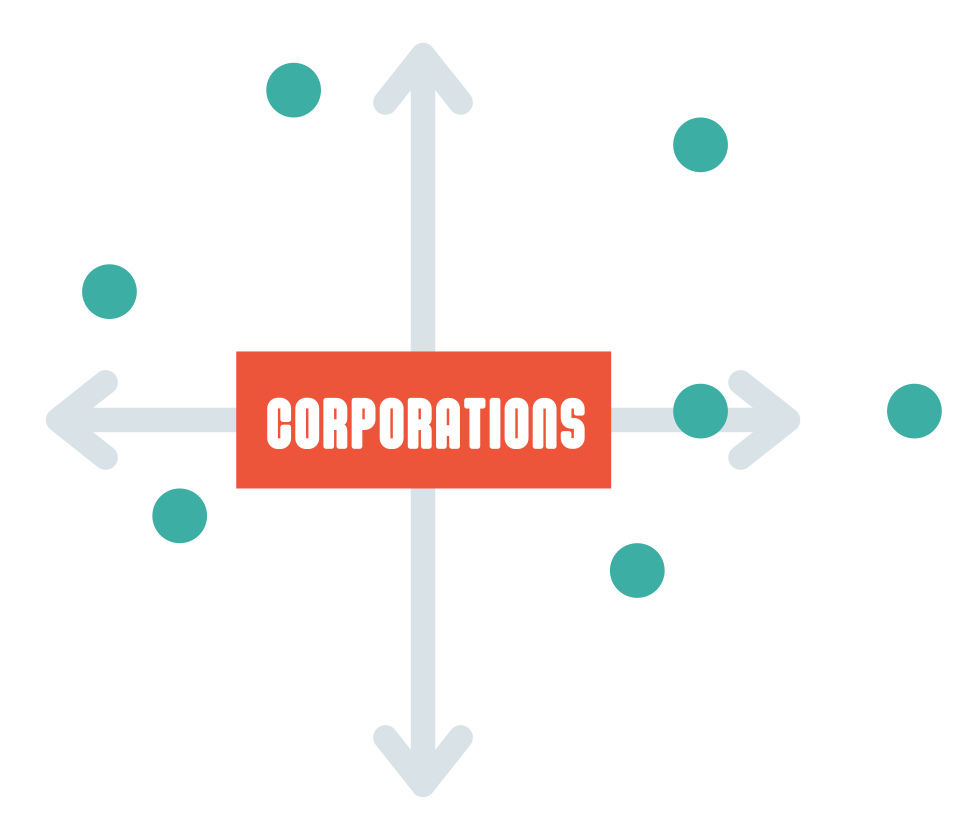
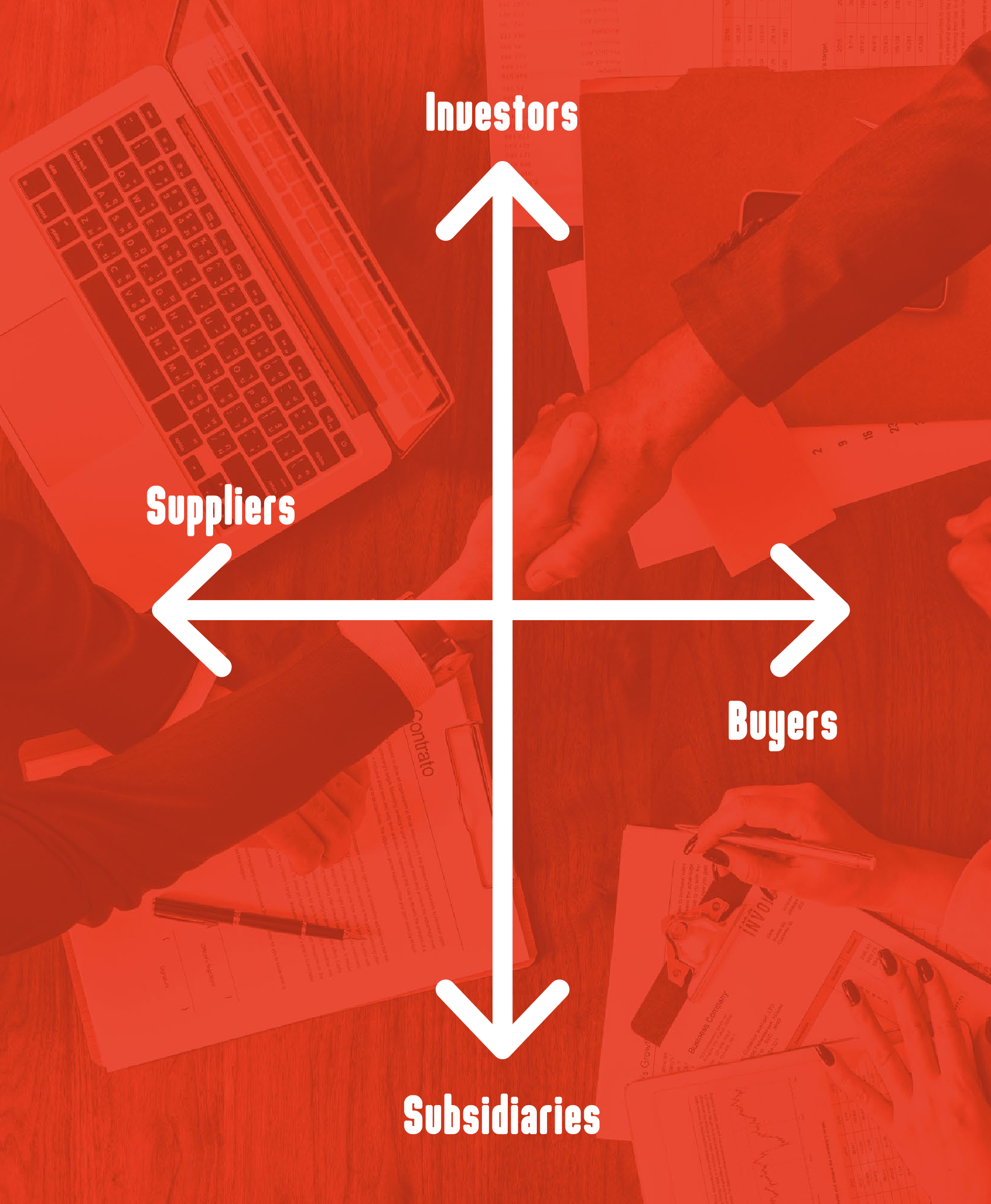
In PODER, we order all this information on a Cartesian graph:

Vertical axis

Identify the chain of decisions and responsibilities within a corporation and/or project. This means that we move downward looking for the actors that have the most power in decisions but also those that make the most money in the final accounting. On this axis we find: beneficial owners, investors, creditors, managers, subsidiaries, and working people.

Horizontal axis

Identify how the company works and its production/operating techniques, and takes us from left to right to locate its providers of raw materials, services, technology, security, transport, marketing, and legal services, until we arrive at the main markets where it sells and its customers.
WHAT IS CORPORATE RESEARCH USED FOR?

We have found that corporate research helps to:

Reveal the structures of power behind private projects that do not respect human rights and have harmful environmental and health impact.

Ensure that corporations fulfill their obligations and inform the population at large (not only their investors) of their activities, impacts, payment of taxes, donations, and agreements with communities.

Pressure corporations (not just governments) to account for their actions and respect the human rights of persons and communities affected by their activities.

Build community tools and an informed and strong social movement that defends human rights, territories, and the environment.

Make information available to communities, defenders, and grassroots organizations in the form of open data, maps, and analytical documents on strategic industries.

Develop, train, and counsel communities, organizations, and social movements interested in the defense of human rights violated by corporate activities.

CORPORATE JIGSAW PUZZLE I

A corporation is an entity with legal identity (legal entity) whose purpose is to engage in commercial activities.

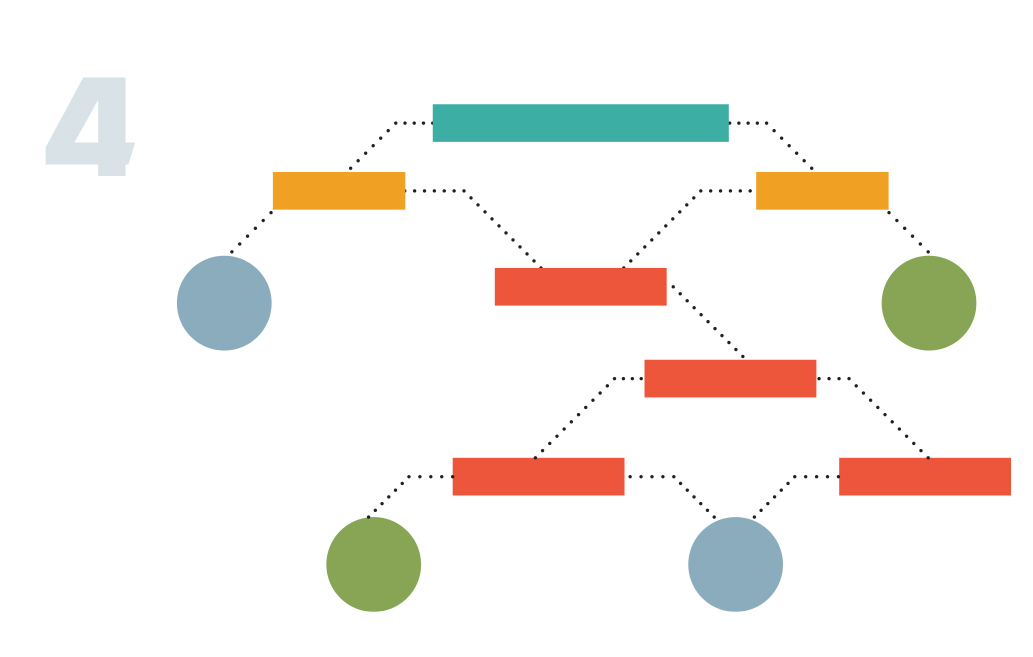
There are  different types of corporations depending on their line of business; their size; whether they are public or private; if they are independent or part of a corporate group (holding); if they are joint ventures; if they have debts; if their employees belong to a union.


They all have a business (legal) name.
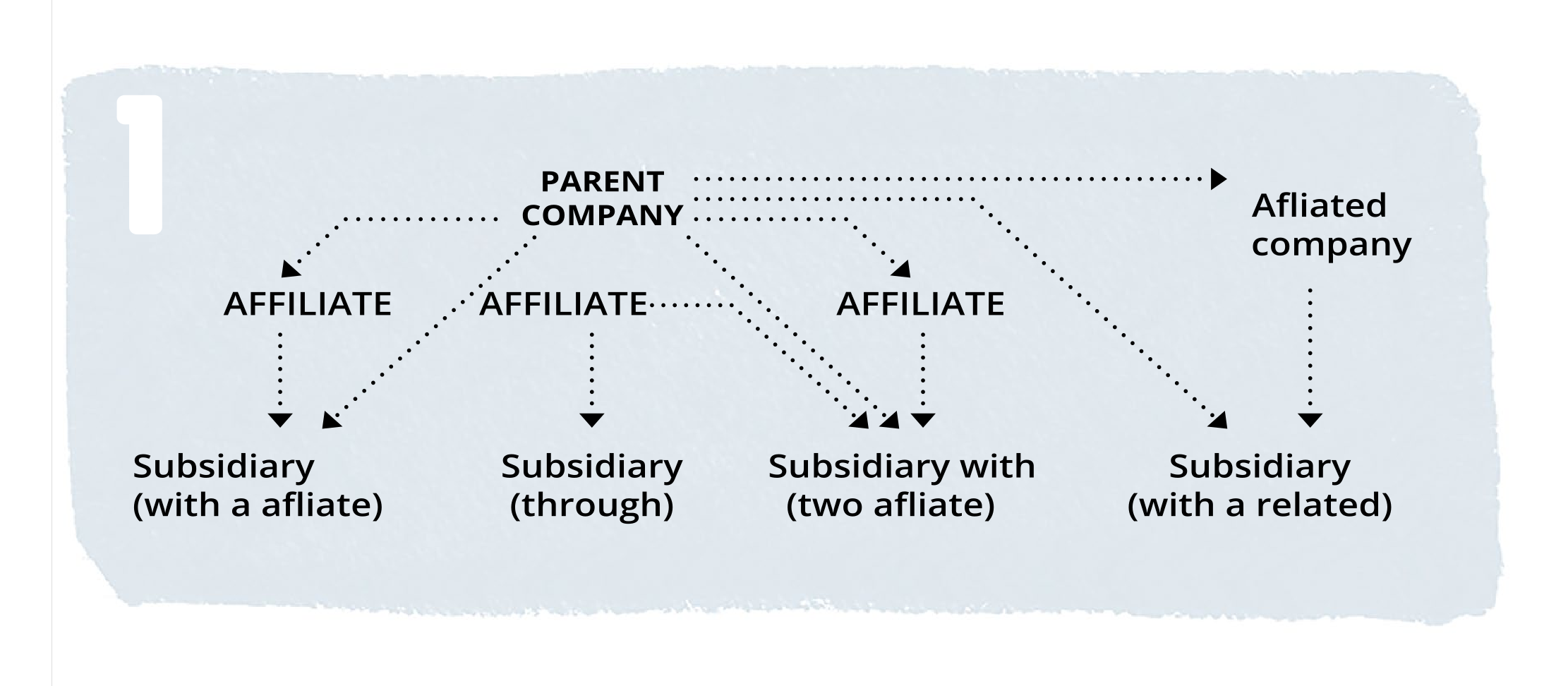
They all have a parent that directly or indirectly controls the subsidiaries or affiliates (if any).
They all have one or more end beneficiaries.
They all are directed by a group of managers (Board of directors).
Those that have nothing to hide disclose their permits; licenses; and contracts for operation, exploitation, marketing, environmental […]; annual reports; etc.
Some have a website and/or at least one official contact. (Email, telephone, address).
All are founded with an initial capital and, at least, must have (public) articles of incorporation.
All have a brand and logo.

The brand is important because it is the company’s image; the brand should always be “clean” and for that the company must show that it complies with the law, protects its workforce, does not pollute, and performs beneficial works in the communities where it operates.
Usually, corporations publish annual and/or quarterly reports intended for their investors. (Many of them with highly technical and financial information).
They may also publish reports on Sustainability or Corporate Social Responsibility (CSR), which usually are the most “idealistic” part and include photographs where the brand is directly or indirectly associated with children, women, and marginalized sectors.
There are also technical reports, forms (10K, M&D, 8K, 13D) for declaring beneficiaries, shareholders, signing of contracts for merger, sale, and/or acquisition of other companies. These documents are usually mandatory for companies listed on the stock exchange.
Sometimes companies publish informative bulletins on their websites and/or videos on their YouTube/Vimeo channels.
With luck, they also share information on their social media profiles, although those profiles are usually more publicity oriented than informative.
Occasionally, key persons appear in interviews in specialized press or at industry events.

Types of corporate structure

CORPORATE JIGSAW PUZZLE II

It is also important to consider that there is very useful and valuable information that companies DO NOT want to divulge or share:

An example of this is tax information since companies report how much they pay in taxes but not how much governments discount or return to them. Such information is reserved as “tax secrecy.”

The same occurs with loans (bank secrecy), names of investors (financial secrecy), and information on companies’ operating processes (industrial secrecy).

Another hotly debated topic is the identity of their beneficial owners, those who receive the largest sums of money from their sales and investments.

The same occurs with quasi-fiscal expenses, which are all the payments or donations companies make to communities in currency or in kind that do not generate a tax receipt but, informally, function as community license payments.

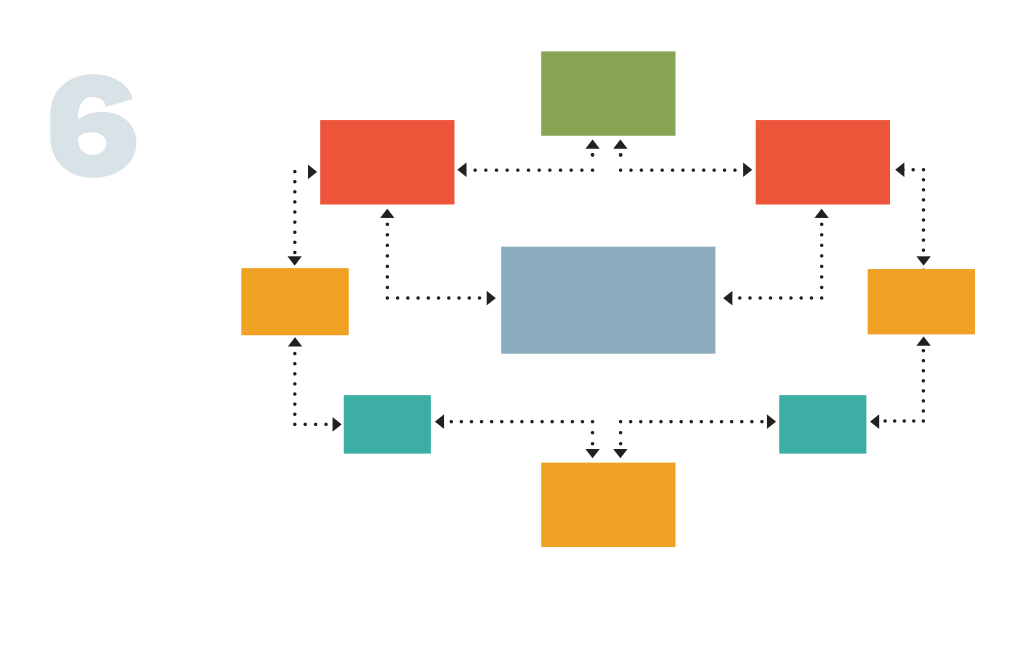
International mechanisms for responsible business conduct

And although there are several efforts to establish standards and offer guidelines for corporations, enforcement remains weak and companies have not incorporated them in their day-to-day operations, especially on issues of environment; human rights; and the prior, free, and informed consent of communities.

Without forgetting that their policies on gender maybe highly superficial and lack a human rights perspective.

LET’S RESEARCH...

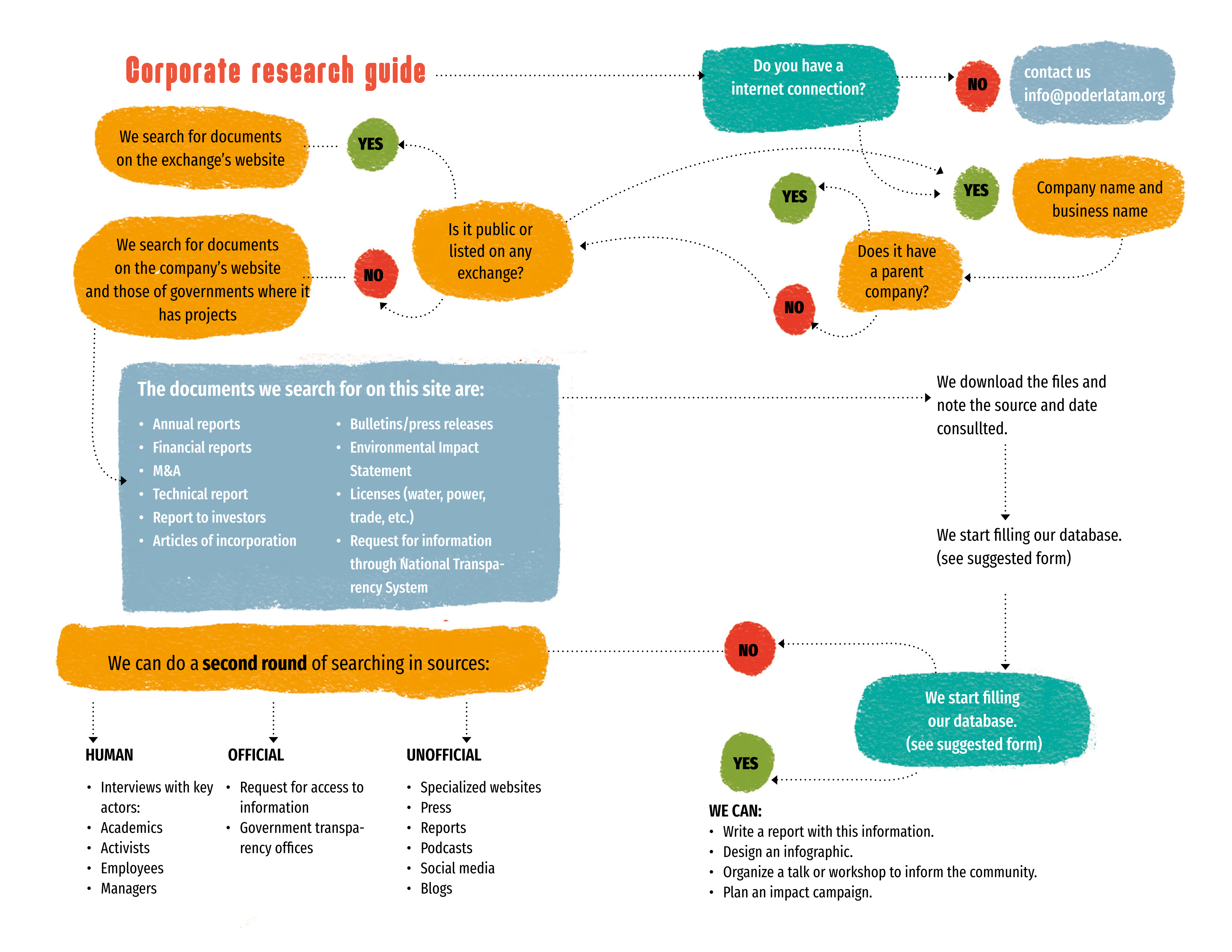
To start, we must take into account the conditions necessary to proceed. This means that much of the public information is easier to obtain online, for which we need to have access to a device (PC, tablet, or smartphone) with an internet connection.

Our methodology divides the information along two axes: the first is what we call vertical analysis and the second horizontal analysis.

Vertical analysis answers two questions:
What is the money trail? and;
What is the chain of command / responsibility?

Horizontal analysis answers the questions:
How is the production chain structured? What are the main business partners? Where on the supply chain are the main risks in relation to environment, transparency, corruption, corporate capture, and security located?

Three things bear mentioning:
1
Each company is a unique web of relationships, and therefore attention should be given to every detail such as business name, punctuation marks, dates, change of purpose, ownership, etc. An example of such details are the legal figures ending in S.A. de C.V. (variable capital joint stock corporation); LLC (limited liability corporation); or S. de R.L. de C.V. (limited liability variable capital corporation).
2
All data must be supported by an official source. Preferably, data should not be more than one year old. If we do not have data from an official source, it is best not to put anything in our database
3
We recommend keeping a research journal or log to record hypotheses, sites, sources, and doubts.

CORPORATE PROFILE I

To start with the vertical analysis of a company, we propose using the following Corporate Research FORM/TABLE:

DATA DEFINITION SOURCE
1. Business name The company’s legal name. Bylaws, annual reports.
2. Parent Company Last holding company. Website or annual reports.
3. Main office Physical address of the company’s headquarters. Website or annual reports.
4. Listing exchange(s) Country of stock exchange and company ticker code. Website or annual reports.
5. Main business lines Refers to the type of products or services the company offers its customers. Website or annual reports and presentations to investors.
6. Subsidiaries Names of affiliates in the corporate group. Annual reports, forms issued by market regulators.
7. Shareholders Individuals or institutions that control at least one share. Annual reports, forms issued by market regulators. Public Registry of Commerce.
8. Lenders Company’s legal name. Annual reports, websites of banks, regulators, and specialized outlets.
9. Liabilities Debts, lawsuits, and fines caused by the company’s activities. Annual reports, government agencies, press releases, and specialized sources.
10. Other financing Financing from development banks or thematic programs. Websites of banks, regulators, and specialized outlets.

CORPORATE PROFILE II

For the horizontal analysis of a company, you can follow the list of data below:
-

DATA DEFINITION SOURCE
Operating processes Type of process, subprocesses, and main substances used. Environmental impact statements, preventive reports, hazardous waste management reports, technical reports published by the company on its websites or by stock market regulators. Some companies issue social impact assessments and, in exceptional cases, human rights impact assessments.
Project name and coordinates Location of plants and projects.
Impacts of operation Environmental and social effects on human rights caused by industrial activity.
Main suppliers Companies that provide services to the company. Company websites.
Main customers Individuals and companies that buy from the company. Website or annual reports, presentations to investors, and specialized websites.

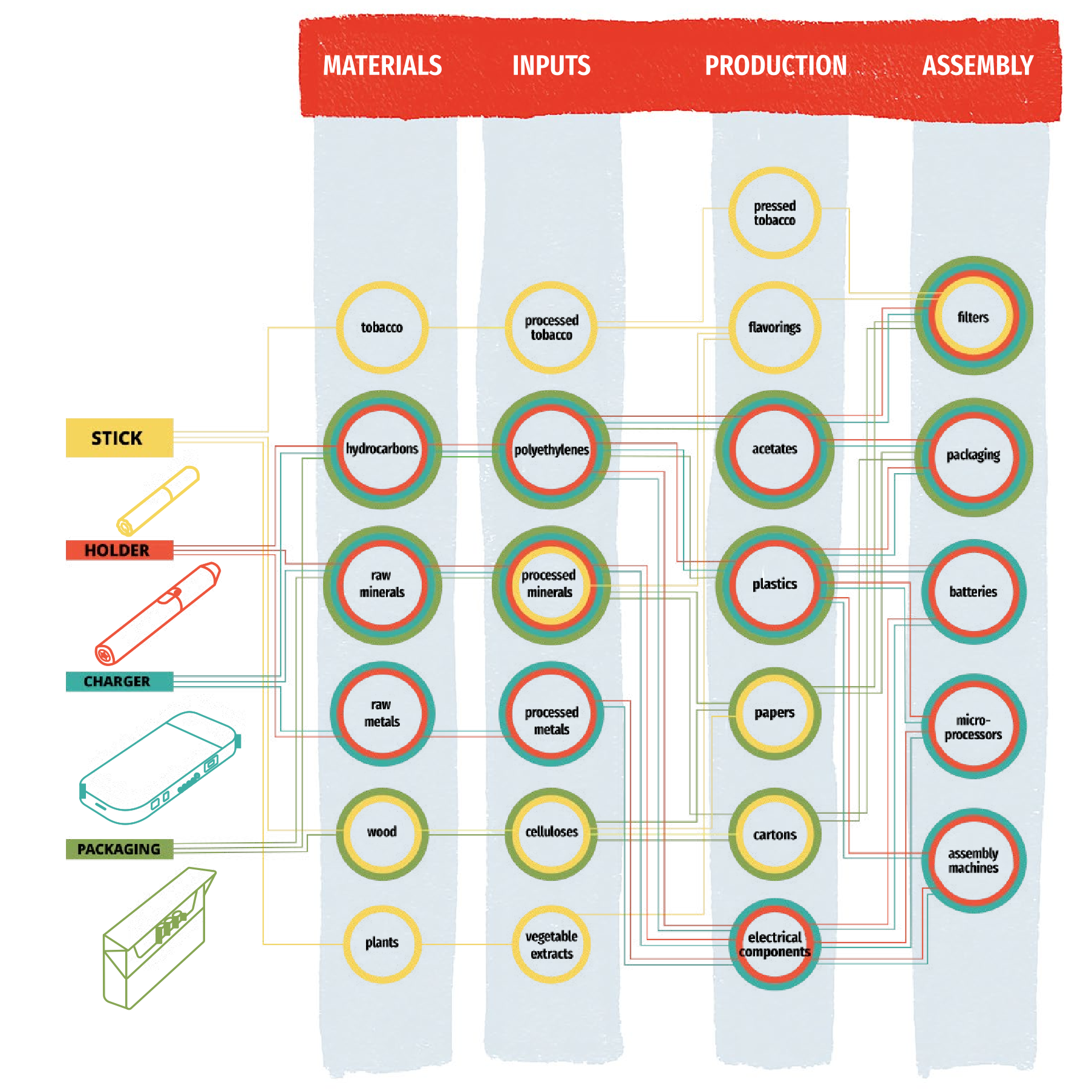
It is important to bear in mind that each industry and each company develops its own supply chain models depending on its context, resources, and normative frameworks.

Below, we show an example of supply chain analysis for Philip Morris IQOS heated tobacco devices from our website WORLD-LESS FUTURE.
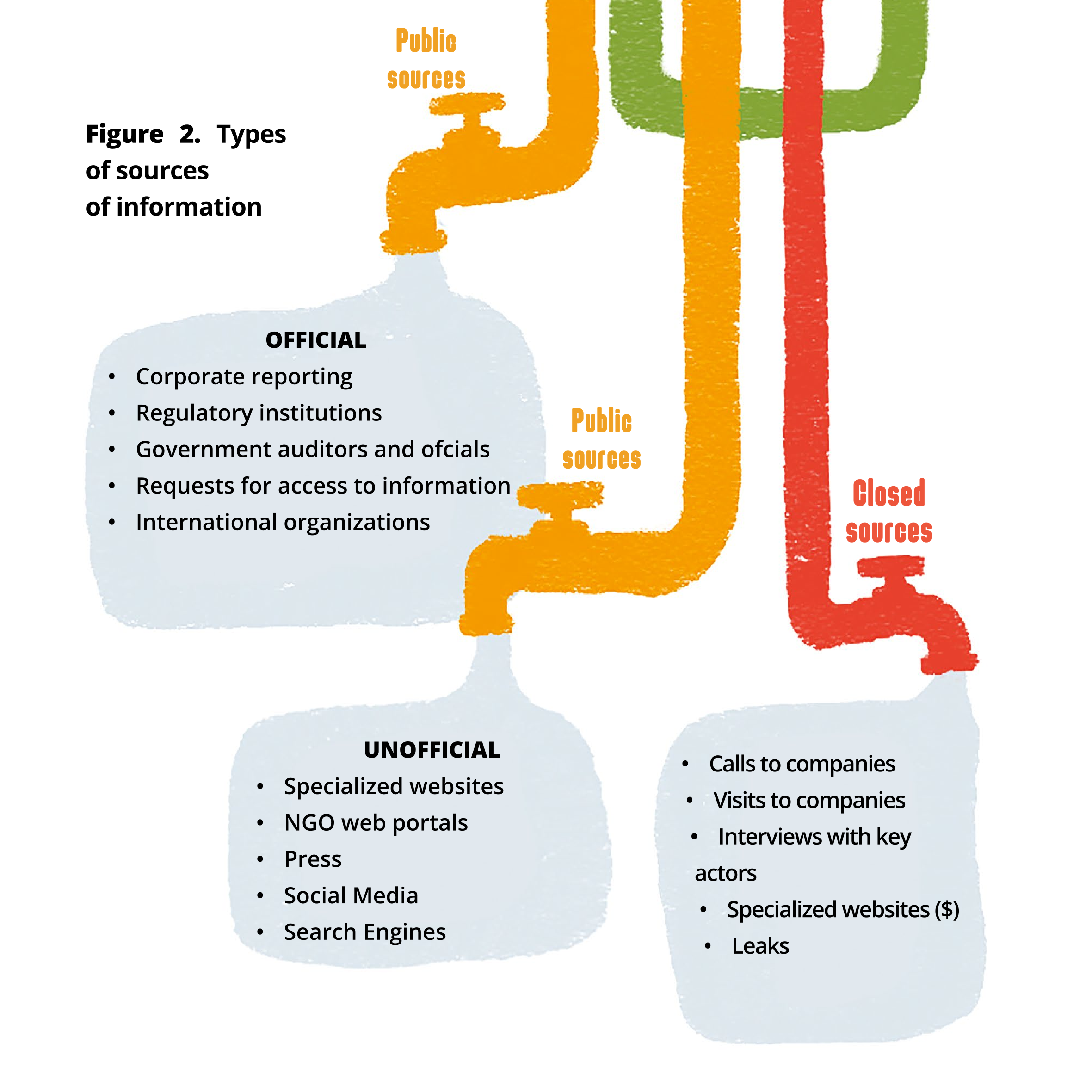
LIST (not exhaustive) OF OFFICIAL SOURCES

For horizontal analysis of a company, you can follow the list of data below:

GOVERNMENT AGENCIES

Public Registry of Commerce (rpc.economia.gob.mx)

Environmental Authority (Semarnat) (www.gob.mx/semarnat)

Commercial Authority (Economy) (www.gob.mx/se/)

Tax Authority (SAT) (usaspending.gov)

Federal Authority (ASF) (www.asf.gob.mx)

Electoral Authority (fec.gov)

Authorityon Transparency (inai.gob.mx)

Copyright / Registered

INTERNATIONAL ORGS.

Inter-American Development Bank (mydata.iadb.org)

International Monetary Fund (imf.org)

European Investment Bank (eib.org)

World Trade Organization (wto.org)

Ecuator Principles (equator-principles.com)

Principles for Responsible Investment (unpri.org)

GlobalCompact (unglobalcompact.org)

Companies

Chambers of Commerce

Company websites

Interviews with key people in management

Regulators

Mexican Securities Exchange (https://www.bmv.com.mx/)

Securities and Exchange Commission (sec.gov) [EE.UU.]

System for Electronic Data Analysis and Retrieval (SEDAR +) [Canada].

List of unofficial sources

TOOLKIT I (search for data)

To start searching for information on a company, you can use the following list of data:

TOOL DEFINITION TIPS
Internet search engines The search bars preconfigured in the browser. The best known is Google but the most secure alternative is DuckDuckGo since it does not generate a history and does not trace our computers’ identity. Search alerts sent via email to update the information.
Government websites Public Registries of Commerce, Platforms for Access to Information, Regulatory Agencies, Commissions, Law Enforcement, Legislative and Judicial Branches. Use Boolean filters to save time. (See Annex III)
Interviews / Surveys Questionnaires with open or closed questions to collect information from human sources. They may be people in government, companies, academia, other NGOs, etc.
Whistleblowers Whistleblowers are people who have access to important information and release official documents on platforms that protect their identity. Usually they are company or government employees. Key actors with knowledge of the issue, context, challenges, etc. Think of ways to protect the whistleblower and their identity.

LET’S ANALYZE...

To analyze our information, first we need to copy out and order the data collected. To do that, we can follow the diagrams suggested in research sections I and II.

Our analysis should be guided by our research questions and by our direct observation based on systematization of the results obtained. To define our research questions, we usually define what we want to know:
who are the key actors in decision making, in the money trail, or who are the main buyers of the products marketed?
By observation, we refer to patterns or tendencies or data that raise more doubts or comments or reveal new information. These important patterns or data emerge, for example, from comparing income with debt or comparing the data presented in environmental licenses with the technical reports offered to investors.
The analysis is more profound and insightful when we develop it collectively and try to understand the core aspects of industrial projects, their value chain, and/or their main alliances or marketing strategies or impact within
governments (corporate capture).

TOOLKIT II (analysis)

TOOL DEFINITION TIPS
Power map A graphic diagram that allows us to identify and rank a set of actors with particular interests in an industrial project. Helps assign categories and attributes to each actor, e.g. level of influence in decision making, proximity to the presidency, etc.
Community cartography A diagram based on a map of the territory where an industrial project is established. It allows us to cross various items of data such as polygons, events, sacred places, crops, flora, fauna, etc. Community cartography helps us tell our stories and raise visibility of intangible resources such as culture, biodiversity, and life.
In-depth interviews / Discussion groups Like questionnaires, they allow us to gather data, and also help to confirm or reject hypotheses with key actors. When we order the information, we can make summaries or tables to present to experts who can give us their opinions during the analysis.
Meetings / Workshops Open meetings or community workshops may also have the purpose of conducting a collective analysis of the data collected. As in interviews, we can solicit feedback from communities by presenting preliminary results.
Databases Aligned spreadsheets or tables that give us an overview of financial, geographic, and environmental information. A good database can generate graphs, analysis, alerts, or reports on projects, companies, and their allies. It is VERY IMPORTANT to have a clean base, meaning that the names are in the same format, respect commas, spaces, check figures well, etc.
SWOT SWOT means: Strengths, Weaknesses, Opportunities, and Threats. This tool consists of putting in perspective a list of internal factors (Strengths / Weaknesses); and external factors (Opportunities / Threats) for our organization. This tool helps us to plan and develop strategies for impact, research, and risk analysis.
Problem tree/fish Usually, the “tree” shape helps us establish correlations among variables or factors such as “roots” (causes of a problem / situation), the “trunk” (problem / situation), and “branches” (effects of the problem). A variant is the fish shape.
Logical framework Helps us order and plan expected changes (impacts) of our strategies for research, communication, and impact with key actors.

Depending on our research needs, we will choose our analysis tools. Many of them may be complementary but the most important thing is that they help us tell our own stories.

Remember that analysis goes from simple to complex. Our firs questions usually are: What is the relationship between this company and this other one? Or why did the parent company found this other in a joint venture?

As we advance, we will develop more complex questions that relate earnings with key persons, with contract prices, and under license from certain authorities.

You can see an example of a Power Map extracted from our own website.
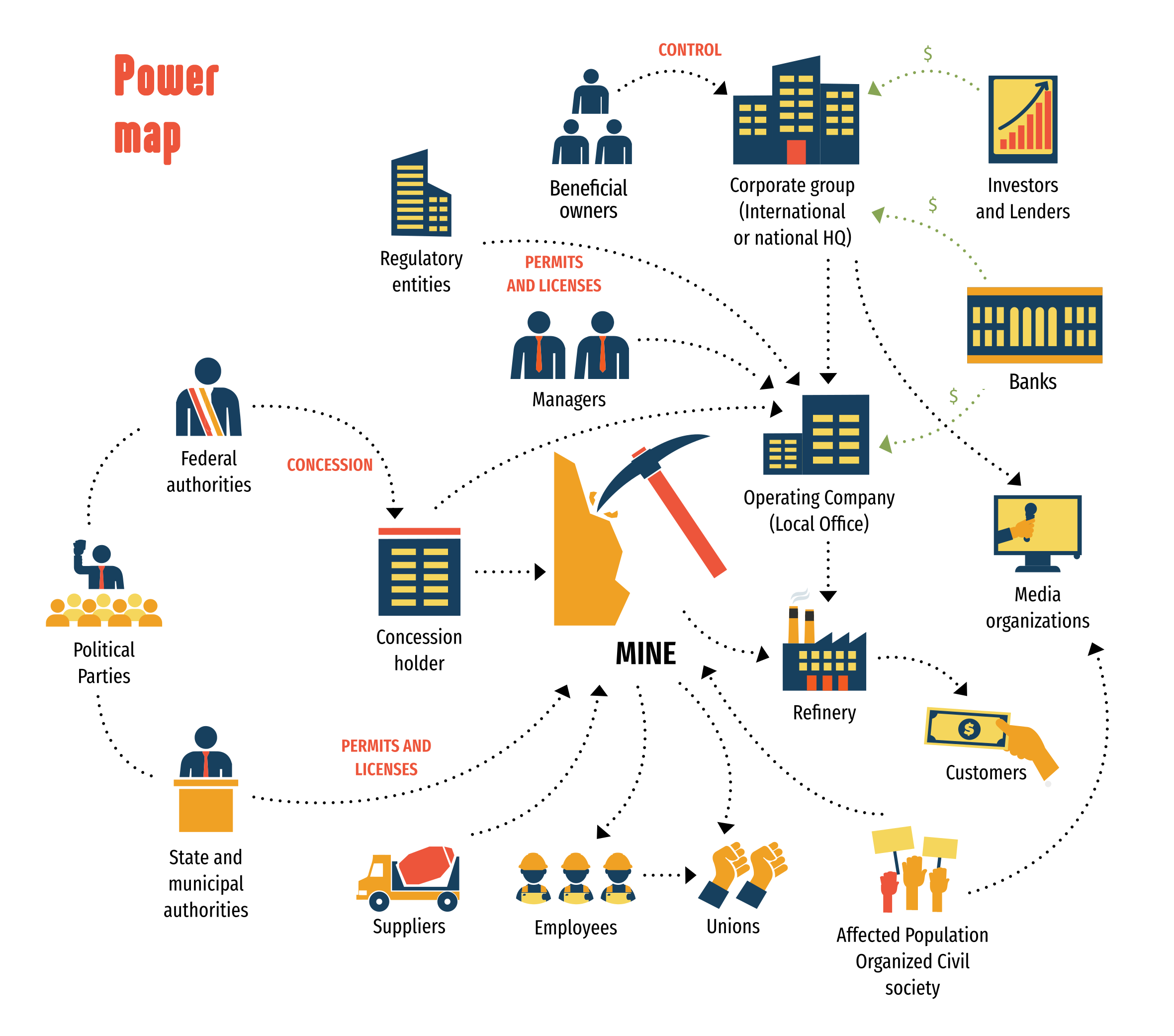
Se puede observar un ejemplo de Mapa de Poder extraído de nuestro sitio.

The above map is an example of the community cartography tool extracted from the microsite Sierra de Apuestas.

After completing our analysis, we need to think about the ways we want to communicate our findings:

1 First, we need to ask ourselves who our audience is. In other words, if we want to share our information with actors beyond our community, allies, authorities, and corporations, among others.

2 Second, we need to ask ourselves what impact we want to achieve with our target audience? This refers to the type of reaction or conduct we want to trigger in our audiences.

3 Third, it is important to ask ourselves what is the best format to present our information to produce the desired impact on our target audience. And that means whether we want to present our information in the form of a printed or digital report or in an infogram, table or graph, or video. Depending on the financial capacity and skills of our community, we can consider digital formats such as websites or informative videos, podcasts, and reels.

4 Fourth, we can consider channels to divulge our research depending on the intended format, audience, and impact. This means that we have to know what channels are best to most effectively reach our target audience.

5 Last, and depending on our availability of time and tools, it is desirable to track or monitor the reach of our communication.

OTHER TOOLS

TOOL DEFINITION EXAMPLES
Human Rights Impact Assessment (COBHRA) A community-led research methodology that incorporates several analysis tools. Its aim is to establish a baseline that helps to record potential impacts of investment projects. Ixtacamaxtitlán, Puebla
Río Sonora
Tower Builder A digital platform (microsite) developed by PODER, which helps us present, in simple and interactive form, our main research findings for viewing in several tabs. Can be consulted on a PC or smartphone. Torre de Control
El Negocio de las Vacunas
Risk Analysis A balance that helps us identify the potential risks (physical, digital, material, and psychosocial) of our research activities. It helps us evaluate conditions and implement measures for the prevention and mitigation of potential threats and/or attacks.
Meetings / Workshops Meetings or workshops may also be used to provide validation and feedback on the results and reports produced by our research. They can also be used for planning impact strategies, outreach training, and other purposes.

In conclusion…

We want to reiterate that, in the chain of actions that make up PODER’s methodology, corporate research is complemented by various tools of:

Domestic and international impact (see Annex II)

Community Organization

Communication

Strategic Litigation

Collective Care (protection)

If you want to know more about these tools and receive feedback on your research or send us comments to improve this manual, you can write to info@poderlatam.org.

We also want to remind you that PODER is a non-profit organization, and if you want to invite us to give this workshop for your community or local organization, we offer it at no cost, provided our training is used to defend rights, territory, and resources against abuses of corporate power.

We hope this has been useful for you and your community / collective / union / organization.
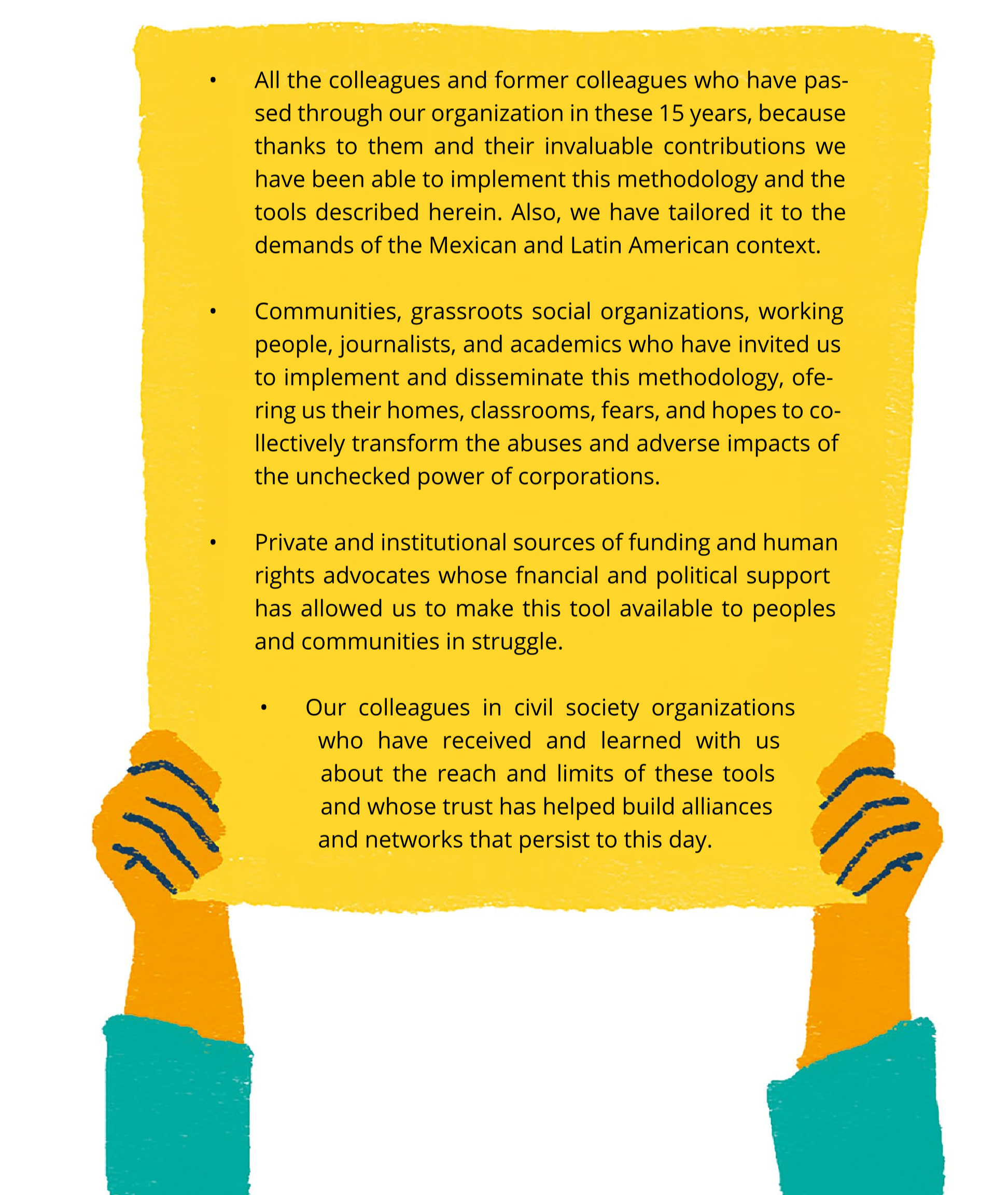
Acknowledgements: